Is AI Set to Replace Marketers? Understanding The Evolving Marketing Landscape

“61.4% of marketers are now using AI to craft content and improve how they work.”

This startling statistic sheds light on the growing influence of AI in the marketing domain.

As AI technology rapidly advances, its integration into marketing strategies is becoming more prominent. While some fear that AI may replace human marketers, it’s crucial to understand that AI serves as an ally rather than an adversary.

Through automation, data analysis, and enhanced personalization, AI is reshaping the marketing landscape, allowing marketers to focus on what truly matters—creativity, empathy, and human connection.

You might be interested in: Words That Work Wonders: The Rise of AI in Crafting Compelling Copy

The Role of AI in Marketing

AI-driven Data Analysis: Smart algorithms sift through vast amounts of data to find patterns and insights that improve marketing efforts.

Content Creation and Personalization: AI helps generate tailored marketing messages that better engage the target audience.

Digital Advertising Optimization: Leveraging machine learning and real-time bidding to place ads more effectively.

Predictive Analytics: Anticipate customer needs and market trends to inform strategic decisions.

Chatbots and Conversational Commerce: Enhance customer experience by offering personalized interactions.

Social Media Insights: Analyze consumer behavior to tailor campaigns with high precision.

SEO and Content Strategy: Automate keyword research and optimize content accordingly.


Benefits of AI in Marketing

Automation of Repetitive Tasks: AI tools like chatbots and data analytics streamline operations, allowing marketers to focus on creative and strategic planning.

Data Analysis at Scale: AI-driven data analysis unveils customer preferences, leading to more focused marketing efforts.

Personalized Customer Experiences: From recommending products to customizing email campaigns, AI enhances customer satisfaction.


Common Misconceptions

Despite concerns, AI is not set to fully replace human marketers. While it may take over mundane tasks, the core elements of marketing—creativity, empathy, and human connection—are irreplaceable by AI. Tools like chatbots and data analytics are designed to complement, not compete with, human creativity.

Evolution of Marketing Roles

AI is altering traditional marketing roles and skill requirements:

Data-Driven Decision-Making: Marketers now rely heavily on data insights to drive their strategies.

Technical Proficiency: Understanding AI tools and machine learning is becoming increasingly important.

Marketers must adapt to new technologies to remain competitive. Embracing data-driven approaches and leveraging AI for enhanced creativity are key to thriving in this evolving landscape.

Challenges and Opportunities

Challenges:

Job Security Concerns: Misconceptions about AI replacing jobs can cause unease among marketers.

Skills Gap: There is a growing need for marketers to upskill and adapt to AI technologies.

Opportunities:

Enhanced Creativity and Efficiency: AI can handle repetitive tasks, allowing marketers to focus on creative strategy and execution.

Strategic Decision-Making: AI provides data-driven insights that inform better business decisions.

AI: Embrace the Future of Marketing

AI significantly impacts marketing roles by automating tasks, analyzing data, and personalizing customer experiences. However, it is not meant to replace marketers but to augment human creativity and efficiency.

AI’s role is to support human marketers by providing insights and streamlining operations, allowing for more innovative and effective marketing strategies.

Ready to explore innovative marketing solutions? Discover how AdFortless can elevate your marketing strategies with cutting-edge AI technology. Contact us today and transform your marketing landscape!


Transforming Customer Experiences: How AI-Driven Chatbots Drive Business Success

In today’s fast-paced digital world, the expectations of customers are constantly evolving.

Small to medium-sized enterprises (SMEs) are finding it increasingly challenging to meet these expectations using traditional customer support methods such as phone calls and email ticketing.

This is where the transformative power of AI-driven chatbots comes into play.

Using advanced AI capabilities, chatbots are revolutionizing customer support, enhancing customer engagement, and driving business success.

The Shift in Customer Expectations

The rise of the digital customer has dramatically altered how businesses interact with their audience.

Today’s consumers are tech-savvy and demand immediate, personalized, and efficient service.

Traditional customer support methods often fall short. Long wait times, limited agent availability, and inconsistent service quality can lead to customer dissatisfaction.

In contrast, AI chatbots offer a modern solution to these challenges.

For instance, Tesco Malaysia implemented the “Talia” chatbot to offer digital catalogs and enhance customer support.

Within six months, the implementation led to 54% of users viewing or downloading catalogs via Messenger, a 4x increase in catalog views compared to email marketing, and 85% of inquiries being efficiently handled by the chatbot.


Benefits of AI-Driven Chatbots

  1. 24/7 Availability

One of the standout features of AI chatbots is their ability to provide 24/7 customer support.

Unlike human agents who have specific working hours and need breaks, chatbots are available round-the-clock.

This ensures that customers can get their queries resolved at any time, regardless of time zones or holidays, significantly improving the overall customer experience.

  1. Faster Response Times

In a world where immediate gratification is highly valued, the speed of response can make or break a customer’s experience.

AI chatbots deliver instant responses to basic queries, drastically reducing wait times.

This not only improves customer satisfaction but also allows human agents to focus on more complex issues that require a personal touch.

  1. Personalized Interactions

Personalization is key to enhancing customer engagement.

AI chatbots can analyze past interactions, purchase history, and other relevant data to provide tailored responses.

By leveraging natural language processing (NLP), chatbots can understand and respond in a way that feels personal and human-like, creating a more engaging and satisfactory customer experience.

  1. Multilingual Support

For businesses operating in multiple regions, language can be a significant barrier.

AI chatbots can easily be programmed to understand and respond in various languages, breaking down communication barriers and ensuring a seamless customer service experience for a global audience.

  1. Cost Efficiency

Implementing AI chatbots can lead to substantial cost savings.

Chatbots can handle a large volume of interactions without the need for additional staffing.

This scalability means businesses can efficiently manage peak times without compromising on service quality.

The initial investment in chatbot technology often results in long-term savings and increased efficiency.

The Inevitable Rise of AI in Customer Service

As AI technology continues to advance, the capabilities of chatbots will only improve. Future developments promise even more sophisticated natural language understanding and problem-solving abilities, further enhancing their role in customer service.

For small and medium-sized businesses aiming to stay competitive, adopting AI-driven chatbots is no longer optional—it’s essential. These advanced tools not only improve customer engagement but also drive operational efficiency and cost savings. By integrating AI chatbots into their customer support strategy, businesses can meet and exceed modern customer expectations.

Are you ready to transform your customer support with AI-driven chatbots? Contact us today for a consultation and discover how we can help you enhance customer engagement and drive your business success.


Showcasing Success: Top 4 Successful Marketing Campaigns from Malaysia

When it comes to effective marketing campaigns, knowing your local consumer insights is key. Understanding your audience allows you to offer solutions that cater directly to their needs and preferences.

In Malaysia, both big and small brands have successfully utilized content localization to tailor their digital marketing strategies.

These four brands provide great examples of how to nail localized marketing campaigns, enhancing their positions in the market.


Sephora: Embracing Local Festivities

The Strategy:

Sephora, the French luxury beauty retailer, knows how to accommodate its various markets worldwide, including Malaysia.

In a 2023 Raya campaign, Sephora encouraged its Malaysian audience to “Be Kind, Be Beautiful” by showing kindness to others and themselves.

The campaign included sharing trending Raya looks and “balik kampung” skincare routines on social media, as well as offering festive-themed makeup services and masterclasses in-store.


Sephora also partnered with local fashion designer Rizman Ruzaini to create three exquisite headscarves inspired by Islamic geometry and batik patterns, which resonated deeply with Malaysian audiences.

Why It Worked:

The campaign tapped into the local festive celebration of Hari Raya and collaborated with a renowned Malaysian fashion designer. Using local models helped break from Western beauty standards, fostering relatability, inclusivity, and cultural sensitivity.


KOSÉ: Protecting Skin and the Environment

The Strategy:

Japanese cosmetics brand KOSÉ collaborated with WEBQLO for their “Protect Your Skin, Protect The Corals” Raya 2023 campaign. The focus was on educating consumers about their new Sekkisei Clear Wellness UV Marine-Friendly sunscreen. The campaign included educational social posts, a roadshow, a lucky draw contest, and an AR Game Filter on Instagram.

Why It Worked:

KOSÉ tapped into the local market’s environmental concerns, promoting a sunscreen that protects both skin and coral reefs. The blend of English and Malay languages in the campaign created a relatable and culturally resonant message.


IKEA: Cultural Integration in Penang

The Strategy:

To launch its new store in Penang, IKEA used the local Hokkien dialect in its marketing. The campaign included playful wordplay with Hokkien words that sounded similar to “IKEA.” Ads featured funny pairings, such as a chicken with a cabinet, saying “We are not Kay Kia. We are IKEA.”

Why It Worked:

By using the local language and traditions, IKEA connected with the Penang community, generating excitement for the new store. The playful wordplay and relatable phrases made IKEA feel more approachable and relevant.


ZUS Coffee: Creative Charm and Virality

The Strategy:

ZUS Coffee has become one of the most loved local brands in Malaysia, thanks to their creativity and charm. Their latest campaign “Matcha Macam” involved an unconventional advertisement featuring a cat licking a menu screen, part of a collaboration with Niko Neko Matcha, a local matcha brand.

This campaign included adorable cat-themed merchandise and unique promotional tactics.

The quirky ad gained international fame when the popular Twitter account @/nocontextcats reposted a video from Xiao Hong Shu user @/momo, captioned, “The perfect ad doesn’t exi-.” The tweet went viral overnight, garnering 6 million views.

Why It Worked:

The campaign’s success is evident from the overwhelming online reactions and increased customer engagement, both locally and internationally. ZUS Coffee capitalized on this momentum, acknowledging the viral tweet with the proud statement, “Mom, we’ve made it.”

The campaign also highlighted the artistic talent within their team, as the illustrative work on the merchandise was contributed by the Creative Director’s younger sibling, adding a personal touch to the marketing effort.


Key Takeaways from Malaysia’s Best Localized Campaigns

Sometimes the best customers are right in your own backyard!

These localized campaigns in Malaysia effectively tapped into cultural traditions, language, and festive occasions. By planning campaigns that are significantly relevant, these brands established an emotional connection with Malaysian audiences.

Evidently, going local is an effective strategy that can help brands increase engagement, raise awareness, and attract more customers.

Ready to elevate your marketing game with localized strategies? Contact AdFortless today and discover how we can help your brand resonate deeply with local audiences. Let’s work together to turn cultural insights into impactful campaigns that drive results!

Digital Marketing in 2024: Why It’s Vital for Thriving SMEs

In the digital age of 2024, Small and Medium-sized Enterprises (SMEs) should recognize digital marketing as a pivotal element for achieving success.

It’s no longer a choice but a necessity, offering ways to connect, enhance visibility, and foster growth in an efficient and cost-effective manner.

Check out our Top 6 Digital Advertising Trends for 2024

The Essence of Digital Marketing for SMEs

Expanding Reach

Digital platforms dismantle geographical barriers, enabling SMEs to tap into global markets and transform from local entities into worldwide competitors.

Cost Efficiency

With digital marketing, SMEs enjoy a high return on investment, capitalizing on affordable strategies that yield substantial results without heavy expenditures.

Targeted Marketing

Digital marketing’s precision targeting allows SMEs to reach specific audiences with tailor-made messages, enhancing the conversion potential significantly.

Pioneering Trends in 2024

AI and Machine Learning Integration

AI technologies, including chatbots and personalized marketing initiatives, are crucial for SMEs, improving customer interactions and operational efficiencies.

The Surge of Video Marketing

The popularity of platforms like TikTok and YouTube underlines the immense potential of video content in capturing and retaining audience interest.

Hyper-Personalization

2024 underscores the importance of personalization. SMEs are leveraging customer data to offer individualized experiences, aligning products and messages with personal preferences and behaviors.

Developing an Effective Digital Marketing Strategy

Goal Identification

Setting clear, measurable objectives is the first step. These goals guide the choice of digital marketing tactics and tools.

Audience Understanding

Having an in-depth insight into the audience enables SMEs to segment and target their markets more effectively, ensuring higher engagement rates.

Optimal Marketing Mix

A balanced mix of SEO, content marketing, social media, and email marketing, customized to the business’s unique goals and audience, is critical.

Data-Driven Decision Making

The dynamic nature of digital marketing necessitates a reliance on data. Continuous analysis and adaptation based on performance metrics are vital for sustained success.

Want to know if you’re going in the right direction? Make sure to check out our 2024 Digital Advertising Pitfalls: The Top 5 Mistakes to Avoid!

Unlocking SMEs Success with Digital Marketing in 2024

For SMEs in 2024, engaging in digital marketing is indispensable. It opens doors to global markets, fosters efficient resource utilization, and facilitates precise customer targeting.

In embracing the emerging trends and crafting a well-thought-out digital marketing strategy, SMEs not only ensure their survival but also set the stage for remarkable growth and success. In this digital era, adaptability, innovation, and customer engagement are the hallmarks of thriving businesses.

Empower your SME with AdFortless today. Dive into digital marketing and transform challenges into opportunities. Start now for unstoppable growth!


2024 Digital Advertising Pitfalls: The Top 5 Mistakes to Avoid

As we head into 2024, the principles of digital marketing continue to evolve.

While content remains king, successful strategies require more than just great content; they require a keen awareness of potential pitfalls.

As technologies and consumer behaviors shift, avoid these critical missteps. Here are the top 5 “DONT’S” in digital marketing for 2024.

1. Relying Solely on Paid Ads

Paid advertisements are undeniably a powerful tool if you’re looking for immediate visibility and quick results, but relying solely on this method alone can be short-sighted.

It is a significant drain on resources over time, especially without a comprehensive strategy that includes organic growth.

The efficacy of ads is also subject to ad fatigue and increasing consumer ad blockers.

Social media platforms like TikTok and Xiao Hong Shu offer potential for businesses to go viral and gain exposure through their algorithm-based systems. This means that you can potentially gain tens of thousands of engagements overnight without having to spend a penny on paid ads.

In 2024, balance is key. Invest in creating valuable content and establishing a strong organic presence online to complement your paid efforts. This mixed approach ensures a sustainable and diverse marketing strategy.

2. Not Maximizing Social Media

Social media is not just a trend; it’s a fundamental shift in how humans communicate.

Despite this, many businesses still fail to fully leverage social media platforms.

In 2024, social media continues to be a potent tool for building relationships with your audience, understanding their preferences, and engaging with them on a personal level.

Neglecting social media or using it purely for promotional messages is a missed opportunity. Successful digital advertising requires active, genuine engagement.

Create content that informs, entertains, and encourages interaction. Remember, social media is a two-way street.

3. Marketing on the Wrong Channels

With the plethora of digital channels available, it’s tempting to try and maintain a presence on them all.

However, not all platforms are suitable for every business.

A common mistake is spreading marketing efforts too thin across multiple channels, some of which may not reach your target audience.

In 2024, it’s more important than ever to research and understand where your audience spends their time.

Tailor your strategy to focus on these platforms.

TikTok: Well-suited for brands targeting a younger demographic with dynamic, creative, and trend-driven content.

Xiao Hong Shu: Offers a unique space for lifestyle and luxury brands, especially when aiming to engage with a Chinese audience through UGC and KOL collaborations.

Instagram: Perfect for visually-driven brands, particularly in fashion, travel, and food industries, looking to leverage high-quality imagery and influencer partnerships.

Facebook: Strong channel for a broader demographic, excelling in community-building, brand awareness, and targeted advertising.

WhatsApp: Best for businesses emphasizing customer service and intimate, personalized marketing via direct communication and WhatsApp Business features.

Also remember to prioritize quality over quantity to ensure your marketing efforts are both efficient and effective.

4. Ignoring Mobile Users

The dominance of mobile internet use continues to grow, making mobile optimization non-negotiable.

Ignoring mobile users — or providing a subpar mobile experience — is one of the gravest mistakes a business can make.

Ensure your website is mobile-friendly, from the design to the loading speed and interactivity. Furthermore, consider how mobile usage affects the consumer journey.

Optimize your content and ads for mobile consumption to ensure a seamless experience across all devices.

5. Getting Obsessed with Short-term Marketing Objectives

In the fast-paced world of digital marketing, it’s easy to get caught up in short-term gains at the expense of long-term growth.

Obsessing over immediate metrics like clicks and conversions can lead to tactics that aren’t sustainable and neglect the importance of building brand loyalty and awareness.

In 2024, take a step back and view the bigger picture.

Develop a balanced strategy that drives immediate results while also investing in long-term growth.

Prioritize content that builds a connection with your audience and establishes your brand as a leader in your industry.

Navigating Success in the Evolving World of Digital Marketing

Mastering the digital advertising landscape in 2024 demands a strategic and adaptable approach.

Bypass common pitfalls by diversifying your efforts, authentically engaging with your audience, choosing the right channels, optimizing for mobile, and aiming for long-term goals.

With AdFortless as your partner, you’ll leverage finely tuned strategies and cutting-edge technology.

Our expert team ensures your brand connects effectively with its audience and stands out in a competitive marketplace.

Choose AdFortless, and transform potential challenges into substantial opportunities for your brand.

Leveraging Click to WhatsApp Ads (CTWA): A Game-Changer for Customer Engagement

In 2024, Malaysians’ favorite social media platform, WhatsApp, emerged as the most widely used social media app among users aged 16 to 64, with a monthly usage rate of 90.7%.

On average, users open and interact with WhatsApp a staggering 852 times each month, significantly surpassing the interaction rates of other social media platforms, including TikTok.

Since Meta’s acquisition of WhatsApp, the platform has undergone significant transformations, particularly in facilitating business-customer interactions. Meta has introduced various features to enhance business connectivity with customers through WhatsApp.

These include the integration of a direct “WhatsApp” button on Facebook pages and posts, as well as the ability to direct customers to businesses’ WhatsApp accounts from ads.

One notable innovation, Click-to-WhatsApp Ads, was launched by Meta in 2023, aiming to foster deeper customer engagement and facilitate communication between businesses and their new audience.

With WhatsApp’s popularity and Meta’s continuous efforts to enhance its business capabilities, leveraging this platform can significantly impact customer engagement and overall marketing success.

If you’re interested in harnessing the vast potential of WhatsApp to engage your audience, we recommend checking out these informative articles:
WhatsApp Broadcasting: A Complete Guide for Beginners
Using WhatsApp Broadcasting for Marketing
SMS vs Whatsapp Marketing

What is Click-to-Whatsapp Ads (CTWA)?

In essence, CTWA incorporates a call-to-action button on your Facebook and Instagram ads, enabling customers to directly start a WhatsApp conversation with your business.

These ads can be placed across various segments on Facebook and Instagram, including News Feed, Stories, and Marketplace. This feature facilitates enhanced customer interaction, supports lead generation, and boosts sales and marketing efforts efficiently.

The Power of Click-to-WhatsApp Ads

Data, Data, Data

Click-to-WhatsApp ads are like a treasure trove of data, making them a marketer’s dream tool.

By tapping into Facebook and Instagram’s massive reach and precise targeting based on a myriad of criteria such as interests, age, and even relationship status, marketers can direct ads to people who are genuinely interested in your products and services!

Once a customer engages through a Click-to-WhatsApp ad, marketers gain valuable insights:

Entry Point: Identify how customers land on the chat.
Intent: Understand the reason behind the conversation initiation.
Ad Interaction: Determine which ad group led to the engagement.
Data Gathering: Collect insights during the chat, such as interests, product preferences, and location.
Purchase Status: Find out if the customer has made a purchase.

Gathering these insights means you can build a detailed customer profile, just like knowing your regulars by name and their usual orders.

This gives marketers a 360-view of the customer’s journey, enabling them to shift from bombarding them with ads to engaging them in meaningful conversations on WhatsApp, saving precious marketing ringgit.

And the best part? You’re capturing every lead, securing valuable info such as names and phone numbers, ensuring your sales funnel is as leak-proof as a well-packed coffee takeaway.

This approach not only cuts down on marketing spend but also personalizes the customer experience, making every interaction warm and welcoming.

Maximize Impact, Minimize Costs

Meta’s documentation highlights an interesting feature: when a user messages a business through a Click to WhatsApp ad, the initiated conversation will be free of charge for the first 72 hours.

This allows businesses to engage and re-engage with customers without incurring additional expenses, presenting a cost-saving opportunity that could be redirected towards future campaigns.

A notable case study revealed that 47% of customers showed a preference for contact through WhatsApp.

Leveraging this insight, a company employed Facebook Click to WhatsApp ads to connect with business owners, facilitating conversations with their remote sales team.

Within a span of just two months, this strategic move generated over 6,000 conversations. When comparing these efforts to other online conversion campaigns, it was found that the ads directed to WhatsApp achieved a cost per acquisition that was notably five times lower!

Elevate Customer Discoveries & Drive Sales

Click to WhatsApp ads are particularly effective for products or services that require demonstrations or persuasive efforts prior to purchase. They are an ideal choice in several scenarios:

For instances where customers require consultations before committing to a purchase, these ads facilitate real-time, personalized interaction.

They are also useful when detailed customer information is necessary to tailor orders specifically to an individual’s needs.

Additionally, when coordinating appointments, gathering customer preferences via this platform can streamline the scheduling process.

Lastly, Click to WhatsApp ads are beneficial for conducting surveys or leading generation campaigns, where interactions can be managed efficiently through a chatbot.

Click, Chat, Convert: How Businesses Are Striking Rich with CTWA

Lead Generation: EcoWorld Boosting Property Lead Generation with WhatsApp Ads

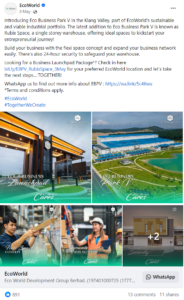
EcoWorld, a renowned Malaysian property developer, has turned to WhatsApp in an innovative strategy to enhance their lead generation. This savvy move involved deploying Click-to-WhatsApp ads across popular social media platforms like Facebook and Instagram.

The idea? To make it super easy for potential buyers to chat directly with a sales agent about the ins and outs of owning an EcoWorld property.

By casting a wide net and also zeroing in on potential homebuyers who’ve already interacted with EcoWorld online — be it through likes, shares, or visits — the company ensured that their sales team was chatting with people genuinely interested in making a purchase.
Source: EcoWorld

They racked up a whopping 15,000 clicks leading eager prospects to initiate chats on WhatsApp. Even more impressive, 21% of these interactions were with high-quality leads.

Ecoworld also saw returns up to 6.5 times their initial ad spend, thanks to the property bookings that followed.

This clever approach not only diversified EcoWorld’s ways of pulling in leads but also established a more personal connection with potential homeowners, guiding them smoothly along their buying journey.

Source: EcoWorld

Conversion: How Vyatta Boosted Sales and Reduced Costs Using CTWA

Vyatta, an Indonesian company specializing in tech accessories, implemented CTWA through their Facebook ads, specifically targeting individuals who visited their Shopee store but hadn’t made a purchase in the last 60 days.

Here’s how it worked: customers interested in Vyatta’s products would click on the ad’s call-to-action (CTA) button. This action would open a chat in WhatsApp, where they were greeted with an automated welcome message.

For any inquiries, a Vyatta customer service representative was ready to engage, providing further details about the products. If the customer decided to make a purchase, they were directed back to Vyatta’s Shopee store to complete the transaction.

This approach yielded remarkable results for Vyatta. The adoption of Facebook ads with a direct click to WhatsApp feature led to a 5x increase in purchases and a 79% reduction in the cost per acquisition compared to their standard collaborative ads.

Click to Whatsapp with AdFortless!

Unlock the potential of direct customer engagement with Click-to-WhatsApp Ads (CTWA) and propel your business forward.

AdFortless specializes in integrating WhatsApp Business API and CTWA, offering a powerful solution that simplifies customer interactions, maximizes marketing efforts, and boosts sales.

Elevate your marketing strategy and forge stronger connections with your audience with the help of AdFortless. Start transforming leads into loyal customers today.


Words That Work Wonders: The Rise of AI in Crafting Compelling Copy

🤖: 🎩✨ Greetings! I’m ChatGPT, your virtual wizard of words and wonder! Embark on an adventure of imagination with me, where every conversation is a magical journey waiting to unfold! 🌟💬

🙋‍♂️: Thank you, ChatGPT. We’re pretty sure that in 2024 there’s virtually no one that doesn’t know your existence!

The rise of AI copywriting tools like ChatGPT, Jasper, and Copy.ai has sparked intense discussions among professionals in fields from marketing to programming.

We then find ourselves pondering how AI might revolutionize our work or render traditional roles obsolete.

Marketers, in particular, might stumble upon a narrative suggesting that AI could either become the ultimate sidekick for copywriters, streamlining the creative process with remarkable efficiency, or potentially replacing the copywriting profession as we know it.

So, with the rise of AI making the list of our 6 Digital Advertising Trends for 2024, just how far are us from the statement?

How AI is Writing the Next Chapter in Copywriting

AI in copywriting harnesses natural language processing and machine learning. You provide the AI with a brief or “prompt,” and it begins generating content.

Though these tools are relatively new, their ability to produce effective copy can be surprisingly (and to a certain extent, worryingly) useful for copywriters.

Read our article Digital Advertising Copywriting Mastery to find out how good copywriting can boost your business to new heights!

Speeds up the writing process
It’s quick and easy to just grab an instant coffee from your fridge, but it’s a whole different experience when you wait for a barista to meticulously prepare a good old-fashioned latte.

It’s about time, care, and a touch of artistry.

Therefore, we can come to understand: copywriting is NOT instant coffee. Writers need time to think, research, and even grab a coffee (or two), before they finally start tapping away at the keyboard.

🙋‍♂️: Let’s try asking GPT3.5 to “write 5 headlines to sell fried chickens in a humorous tone of voice.”

🤖: “Cluck Yeah! Get Your Wings on with Our Finger-Lickin’ Good Fried Chickens!”
“Fryday Vibes: Dive into Crispy, Juicy, and Downright Clucking Delicious Fried Chickens!”
“Don’t Be Chicken! Try Our Fried Chicken and Let Your Taste Buds Do the Happy Dance!”
“So Good, Even the Chickens Are Begging for More Sambal!”
“Why Did the Chicken Cross the Road? To Get to Our Finger-Lickin’ Fried Chicken Joint!”

If we’re going to be honest, these headlines are not half bad! Considering that AI is able to generate 5 (and possibly 100 more, had you prompted it) in just mere seconds is what is really astounding.

Give AI a good rundown of what you need, and it can pop out a starting draft quicker than you can decide on your coffee order. This can really speed things up from the get-go.

Eliminates writer’s block
Blocked dam no more. With AI, it is possible to keep your light bulb always on.

We understand — sometimes our thoughts just won’t make it onto the page. AI copywriting tools do a good job stepping in to spark creativity with headline suggestions and opening lines.

🙋‍♂️: I need inspirations for writing about Malaysia’s heat.

🤖: “Beat the Heat: Practical Tips for Dealing with Malaysia’s Tropical Climate”
“Surviving the Scorching Sun: Your Guide to Enjoying Malaysia, Despite the Heat”
“Heatwave Hacks: How to Keep Your Cool During Malaysia’s Hottest Months”

With these engaging starters, you can plot your course for your next content right away! Thanks, ChatGPT!

Error-free Writing
Using AI for writting helps avoid mistaks and keep the style the same. It should make everything you right sound similar…

🤖: There are some spelling mistakes here. Let me fix them for you! Here’s the revised content:

Using AI for writing helps avoid mistakes and keeps the style the same. It should make everything you write sound similar, making your brand look better and more reliable to your audience.

This shows how AI can help create clean, consistent writing that supports a strong, trustworthy brand image.

The Limitations of AI in Copywriting

Using AI for writing is great, but it does have its limits. Here’s what it struggles with:

Making a Custom Content Strategy
Sure, AI can whip up a content plan by throwing together a decent list of steps faster than you can say “keyword optimization.” But crafting a REALLY good content strategy? That requires deep knowledge about a company’s audience, products, and desires.

Only a human writer can master the ultimate mix of content frequency, targeted keywords, and the just-right tone.

They’re also your go-to for keeping tabs on the latest industry trends—no software update required.

Checking Facts
AI can’t check if information is true like a human can. It only makes suggestions based on its training. So, writers need to do some fact-checking detective work themselves.

If they don’t, they and their clients could lose credibility. After all, there have been notorious times when AI, like ChatGPT, dropped the factual ball!

Showing Real Empathy and Understanding Emotions
AI might attempt to mimic empathy—like a robot pretending to cry during a sad movie—but real empathy? Not happening.

Building trust with readers through real shared feelings is something only humans can do. The same goes for understanding emotions. AI might know which words are linked to feelings, but it can’t actually feel them. And that’s why human writers can connect better with readers.

Offering Personal Opinions Based on Life Experiences
It’s true that you can set ChatGPT to have opinions, but it’s going to be like nasi lemak without the sambal – it lacks the essential flavor.

Uncovering what makes a company special often involves personal and corporate opinions. And sharing those opinions passionately in writing is something AI just can’t do.

Where Do We – Human Copywriters – Currently Stand?

Despite all the advancements in AI copywriting tools, human copywriters are far from being outdated.

Sure, AI can help streamline processes and make things more efficient and can churn out text at lightning speed, but it lacks the soul, the creativity, and the intuition that come so naturally to humans.

They fall short when it comes to generating innovative ideas or evoking genuine emotions.
For more intricate assignments like weaving together long-form content or sculpting a compelling story, the finesse of a human writer is indispensable.

It’s not ready to replace humans.

So, where does that leave us? AI tools are not the competition but collaborators. They’re here to take on the time-consuming tasks, allowing human creativity to flourish unhindered.

The objective is to blend the strengths of both worlds: the speed and efficiency of AI with the unmatched creativity and emotional intelligence of human writers.

Embracing the Dance of Technology and Humanity in Copywriting

Ignite your brand’s potential with AdFortless, where the artistry of human creativity meets the precision of AI.

Don’t settle for generic; choose copywriting that resonates with depth and authenticity. Our creative powerhouses, armed with cutting-edge digital insights, are poised to craft stories that touch hearts and prompt action.

Join the narrative revolution with AdFortless — where every word is a step towards your brand’s legacy.

Marketing Strategies for Instagram Advertising

Delve into the world of Instagram – home to over a billion active monthly users and presenting an array of exciting marketing opportunities. With constantly evolving features and algorithms, staying ahead means adopting advanced strategies – a challenge for both new and seasoned marketers.

This guide will uncover advanced Instagram marketing tools and techniques to boost your profile, enhance engagement, and improve conversion rates.

Mastering Your Instagram Strategy: Content, Scheduling, and Goals

Your Instagram strategy will likely differ depending on your specific business goals. Consider the following guidance:

Content Creation: Determine what types of content (Reels, videos, quote posts, Instagram Stories) you’ll produce.

Posting Schedule: Establish a calendar for when you’ll share content and launch campaigns.

Goals and Metrics: Define your objectives (like website traffic growth) and the measurements you’ll use to track progress.

Harness Instagram: Reels, Photos & Carousels

Reels
Maximise your visibility by creating original and entertaining videos on Instagram Reels. Engage your viewers using captivating transitions and effects. Highlight key elements with perfectly timed text for effective emphasis, and enrich your clips with the right audio to bring your stories to life.

Photo
Showcase your products using striking and engaging imagery. Underline their unique features by demonstrating them in action. Keep your photos aesthetically pleasing by maintaining colour consistency with your brand, and use natural light to achieve bright and balanced snapshots.

Carousel
Utilise Instagram carousels to narrate a more profound story with a series of up to ten photos or videos. Ensure the first slide features captivating content to draw audience attention. For a dynamic narrative, mix photos and videos, and experiment with various angles to emphasise the benefits of your product or service.

Need more insights? Check out the Top Social Media Marketing Strategies in Action.

Top Instagram Marketing Tips

Use Hashtags Wisely
Hashtags are super important for Instagram marketing. Without them, it’s tough to reach your audience. They don’t just add meaning to your posts, but also help people find you on Instagram.

While it’s possible to add up to 30 hashtags per post, it doesn’t mean that you have to go all the way up to the limit with hashtags – more does not necessarily mean better. You’d be better off using between 5 and 9 varied hashtags.

To up your Instagram game, choose hashtags related to your specific area rather than only sticking to popular and general ones like #TBT or #Love. And don’t forget, adding a hashtag of your brand like #Colourpopcosmetics can aid in getting more user-generated content.

Create an Instagram Shop
Hunting for ways to increase interactions on Instagram? Why not help your followers connect more easily with you?

The next idea we’re going to explore here is to start an Instagram shop. This feature lets people buy your stuff directly from your Instagram account. But remember, it’s only for business profiles. So, if your posts make someone want your product, they can get it immediately and easily, without having to go to your physical store. With shoppers wanting faster shopping, faster service, and faster delivery, giving them a direct way to shop can really help.

Setting up an Instagram shop can also help you get noticed in the Explore page. It’s got a special “Shop” tab for users looking for new things to buy. Approximately, 130 million Instagram users click on shopping posts each month. Plus, you can tag your products in Stories, IGTV, posts and more to generate more buzz for your products.

Tag Your Products
If there’s a simple way to boost about 37% more sales, it has to be as simple as tagging your products. Creating an Instagram shop is a great way to reach the nearly half of Instagram users who shop on the app every week. But don’t forget, you also need to draw these shoppers to your store!

After setting up your Instagram store and adding your products, you can show off your items in many ways. You can put pictures in your ads, use shoppable links in your Instagram Stories, and even tag your products in your posts. Product tagging can really help boost your sales!

Brands that tag products in at least two posts daily see their transactions shoot up by around 117%. So, don’t hold back. Tag your products in all types of content, starting with your Posts and ads, then moving on to your Stories and Reels.

And, don’t forget to keep an eye on your Instagram analytics. Your Insights can tell you which product tags are getting the most clicks. This can help you figure out what type of content converts best.

Engage with other Accounts
No doubt, being active in the Instagram community is crucial. And we don’t just mean posting often (though that’s important too). You also need to connect with others on Instagram.

Leaving comments on posts from people who follow brands like yours can really give your business a boost, especially if your comments are interesting or useful. Liking and commenting on posts from popular figures in your industry can also help get your company seen by the right people.

Take a look at this example from Duolingo, the language learning app. It is known for frequently interacts with its users on Instagram:

Source: duolingo

Duolingo is known for employing a humorous and light-hearted tone in their comments to engage with users. This keeps followers entertained and builds a connection between the brand and users. Additionally, brands that also have a bird motif are joining the trend and interacting with Duolingo in the comment sections. These interactions create a fun experience that can attract even more followers and foster a positive impression of each brand involved in the conversation.

Collect User-Generated Content
User-generated content (UGC) is an effective tool for boosting engagement on Instagram. It often seems more authentic and credible compared to brand-produced content, which can greatly enhance your company’s reputation.

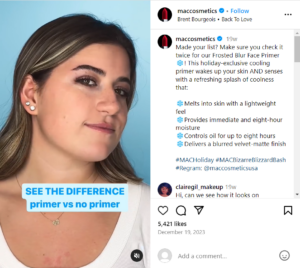
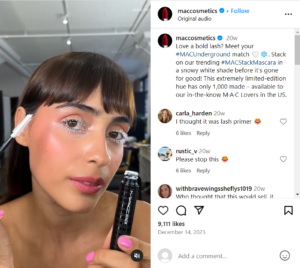
Due to its genuine and somehow “unpredictable” nature, UGC appeals directly to your target audience. It can also motivate others to engage with your brand in the hopes of being featured. One brand that leverages UGC well is Mac Cosmetics.

Source: maccosmetics

Mac Cosmetics regularly spotlights the beautiful styles their customers make using their products. This not only portrays the brand as more authentic and trustworthy, it also demonstrates the potential of their cosmetics.

Source: maccosmetics

Post at the Right Times
Having a solid content calendar helps you stay on top of your posting game. But to truly make an impact, it’s crucial to identify the best times to post on Instagram.

Various reports suggest different ideal posting times. Research suggests that these are the top times to post each day:

  • Monday: 10pm, 10am, or 6am
  • Tuesday: 9am, 4am, or 2am
  • Wednesday: 11pm, 8am, or 7am
  • Thursday: 7pm, 12pm, or 9am
  • Friday: 3pm, 1pm, or 5am
  • Saturday: 8pm, 7pm, or 11am
  • Sunday: 4pm, 8am, or 7am

Keep in mind that though you can take this as a general guideline or overview, these suggested times may not be perfect for everyone. In the ever-changing digital world, there’s no one-size-fits-all solution. Your ideal posting times depend on your target customers and when they’re usually online. Use Instagram Insights to understand your audience’s activity and adjust your posting times to match their online habits.

Respond To Your Followers’ Comments
Earlier, we discussed how commenting on others’ posts can help to gain attention and spread brand awareness on Instagram. Additionally, replying to comments left on your posts can also boost engagement and strengthen customer relationships.

Engaging with Instagram users by commenting on their posts enhances visibility and brand awareness. Additionally, responding to your own posts’ comments deepens customer relationships and boosts engagement.

While not feasible to reply to each comment, addressing common questions shows your audience you value their input and engagement.

Utilising user comments for new content is another great strategy. Consider capturing a screenshot of a comment involving a frequently asked question, then post it with your response. This allows you to address multiple followers at once and keep your content fresh. High-profile brands like Nike and Netflix effectively use these strategies for enhancing customer engagement on Instagram.

Another strategy is to expand your content calendar by turning comment screenshots into posts on your profile. This is particularly useful when addressing a frequently asked question, allowing you to reach multiple customers at once.

Conclusion

In the dynamic landscape of Instagram, staying ahead means understanding and implementing advanced marketing strategies. Brands need to diversify their content, optimise timing, harness Instagram tools, and create engagements for a robust Instagram presence. With user-generated content, smart hashtag usage, and the strategic application of Instagram’s shopping feature, there are numerous techniques to bolster your marketing efforts.

In AdFortless, we offer effortless, comprehensive, smart, automatable solutions for your marketing needs, streamlining the process and ensuring you remain at the forefront of Instagram marketing. Begin your journey to Instagram success with AdFortless today!

Unlocking Efficiency: The Benefits of WhatsApp Chatbots Tailored for the Travel Industry

The travel industry is getting a digital makeover, and travel chatbots are leading the change. These smart chatbots are making a big difference in how customers plan their travels and how travel companies operate.

Travel doesn’t adhere to a 9-to-5 schedule, and neither do chatbots. They serve as on-demand travel guides, meaning they can talk to customers anytime, anywhere, solve tricky travel problems before they become a headache, and switch them over to a human helper if needed.

Chatbots can serve as potent revenue generators in many ways. They can easily boost your customer engagement to 100%, assist customers effortlessly to search for flights and accommodations, provide cost-effective travel suggestions, endorse deals tailored to their unique travel habits, and provide payment gateways to close the sales. This strategic use of chatbots has propelled the travel sector into the top five industries reaping significant benefits from chatbot technology!

Big names in travel, like Expedia, Booking.com, and Skyscanner, are already using these chatbots. They help book trips, recommend places, and offer special deals. This shows smaller travel companies that chatbots could be a great way to make their customers happier!

In this article, let’s dive deeper into what chatbots are capable of doing:

1. Search for booking opportunities

Chatbots are accessible through various messaging platforms like WhatsApp, Slack, and Facebook Messenger. Here, travellers can input information about their destination, dates of travel, and other preferences (like needing non-smoking rooms or wanting all-inclusive options). The chatbot uses this data to sift through choices and presents them during the conversation.

Additionally, chatbots can interact by asking clarifying questions to refine the search results further. These questions might include queries about the budget, the number of travellers, or if the travel dates are flexible.

Take Expedia’s chatbot on Facebook Messenger as an example. It allows users to explore worldwide hotel options and check for available accommodations for their desired travel period.

2. Manage inquiries

Prior to settling on their travel itinerary, users commonly have queries regarding travel insurance, entry necessities, potential toll charges, and more. Chatbots are equipped to respond to these frequently asked questions, providing answers instantly without requiring the engagement of a customer service representative.

Accurate and prompt information is particularly vital in situations like the imposition of new visa regulations or sudden changes in travel policies, experiences similar to the fluctuating travel conditions witnessed during major events or political changes. These scenarios necessitate keeping travellers informed with the most up-to-date information.

3. Finalising reservations

Once users have made their travel choices, such as selecting a flight or a hotel, the chatbot can prompt for essential information such as personal details, ID or passport numbers, and the count of accompanying minors.

The chatbot not only collects this information, but it also facilitates a secure payment platform for customers to pay for their bookings. Upon successful payment, it confirms the reservations and delivers an electronic itinerary through email or a preferred messaging platform.

4. Cross-sell

AI-driven chatbots, with their deep understanding of user preferences, can generate additional cross-selling opportunities. They do this by recommending complementary offerings such as combined flight and hotel deals, vehicle hire services, or special rates on local tours and activities. Furthermore, these chatbots can suggest and provide vouchers for eateries or coffee shops that have partnerships with the travel agency.

This isn’t just great for the company; it’s awesome for travellers too. For instance, not everyone knows about all the awesome spots to check out when they go somewhere new. Like, if you’re heading to a retreat in Kuala Selangor, the chatbot might tip you off about the beautiful firefly parks located in that area, so you don’t miss out on a magical experience.

5. Manage booking & cancellations

Users can engage with a chatbot to organise different aspects of their booking, such as:

  • Requesting wheelchair services.
  • Modifying check-in dates.
  • Selecting seating on flights.
  • Completing online check-ins.

Chatbots also have the capability to assist with booking cancellations without requiring the intervention of a live agent. The chatbot would need to gather the customer’s details and reservation identifiers or Passenger Name Record (PNR). It can then proceed to cancel the existing reservations, suggest alternatives for cancelled flights or hotels, explain the firm’s refund and returns policy, and even initiate refund claims on behalf of the user.

6. Handling luggage queries

Thanks to real-time access to data from departure locations or airports, chatbots can help travellers navigate on arrival. Travellers can enquire to the chatbots about the location of the luggage claim area or on which carousel their bags will arrive.

Additionally, in situations of misplaced luggage, chatbots can assist by lodging a baggage claim using information from the user’s ticket and Passenger Name Record (PNR).

7. Garnering customer feedback

Chatbots provide a conversational, unobtrusive method to collect customer views and responses to surveys. Following a completed booking or service, the chatbot can engage with users, posing questions about their experiences. It could ask, for example, “On a scale from 1-10, how would you rate your satisfaction with our travel agency’s services?” or “Would you recommend our agency to a peer?” It might also invite them to leave comments about potential improvements to the services.

Empowering Your Travel Business with AdFortless

Now, it’s time to embrace the transformative potential of AdFortless’s WhatsApp chatbots and elevate your travel agency to new heights of customer engagement and sales prowess. By capturing inquiries and providing instant, bot-driven responses, we efficiently turn inquiries into bookings.

Our strategy includes re-engaging with those prospects, delivering personalised travel suggestions on WhatsApp to amplify conversion rates. As cold prospects warm up, we utilise timely, customised package promotions and seasonal deals to nudge them toward booking. Throughout the traveller’s journey, continuous engagement via WhatsApp ensures they are well-informed with the latest itineraries and booking updates.

With AdFortless, your agency is not just offering travel planning services—it’s offering connected, seamless experiences that breed loyalty and growth.

YOU focus on creating unforgettable travel experiences,
WE handle complex marketing communication to boost more sales.

The Role of Influencer Marketing 2024 in Malaysia

As we welcome 2024, changes are in store for the world of influencer marketing. This area is always changing, and now we’re set for some big shifts that could make things different in the digital advertising landscape!

In fact, the influencer marketing industry in Malaysia is expected to grow by 10.79% (2024-2028), reaching a value of $102.30 million in 2028!

Influencer marketing will become increasingly important for companies in Malaysia. This year, more online shoppers in the country trust influencers to help them with their issues and learn about products. Influencers also play a key role in convincing customers to buy products or services.

Wanting to know more about what’s in store for your brand in 2024? Read about 6 Digital Advertising Trends for 2024 here.

Leveraging the Power of Influencer Marketing in Malaysia

Influencer marketing has become a go-to strategy for many businesses in Malaysia, thanks to its high return on investment. With about 30 million social media users accounting for 91% of the country’s population, this approach is particularly effective.

Malaysians LOVE being online – on average, they spend three hours each day on social media. This has put Malaysia on the global map as one of the most internet-addicted countries, ranking sixth worldwide! In fact, Malaysians spend an astounding nine hours and four minutes each day on the internet.

Given this, the potential to reach and engage with audiences in Malaysia is huge. This makes it an ideal opportunity for brands to utilise influencers to market their products effectively.

Thus, if your business is still relying solely on traditional advertising methods, you are FAR behind. It’s high time to take advantage of influencer marketing to boost your business.

Before we start with the main points, let’s first understand the different types of influencers we’ll be talking about in this article.

Tier Number of Followers
1. Nano 1,000-10,000
2. Micro 10,000-50,000
3. Mid-Tier 50,000-500,000
4. Macro 500,000-1,000,000
5. Mega >1,000,000

Now that you have a bit of background, let’s dive into the good stuff!

Instagram Reigns Supreme in Influencer Marketing…for now

Instagram is the top platform for influencer marketing campaigns in Malaysia, despite WhatsApp being the most used messaging app overall (93% of Malaysians). Facebook is a close second in general use (88%) and also comes second in preferred platforms for influencer marketing. Instagram is used by 79% of Malaysians, and Telegram by 66%. Despite its overall use, Instagram trumps other platforms in popularity for influencer campaigns, revealing its crucial role in marketing strategies.

Looking ahead, TikTok could be a serious contender against Instagram for influencer marketing dominance in Malaysia. In 2021, TikTok was the most downloaded app in the country. Now, TikTok is closing the gap with Facebook Messenger, currently ranking sixth in the most-used social media chart.

With an increasing number of influencers flooding TikTok, it’s an app to watch out for in Malaysia. While Instagram still leads in influencer marketing, brands should prepare for the rising trend of TikTok. It’s a platform with the potential to redefine the future landscape of influencer marketing.

Malaysian Customers Trust Them!

Malaysian online consumer statistics reveal that 75% of consumers turn to influencers when they need product information or assistance. Essentially, influencers have become trusted sources for product knowledge and problem-solving in Malaysia.

It seems that most online Malaysian consumers heavily lean on influencer advice, reflecting the significant level of trust they carry. Word-of-mouth marketing is highly effective in Southeast Asia, largely because consumers value genuine product reviews before making purchases.

Influencers provide more than just product promotion—they share personal experiences, which appears to be a big reason why they’re valued so much in the market.

Best to Build Trust: Micro & Nano Influencers

Malaysian digital buyers’ insights reveal that half of the online customers relate most with micro and nano influencers. This is largely due to their close-knit circle of friends, family, and acquaintances, leading to stronger bonds. Moreover, 3 in 10 Malaysian consumers now expect a personal connection with influencers, making it more of a demand than a mere strategy to stand out.

Micro and nano influencers could benefit significantly from adapting to evolving digital consumers’ tastes, particularly regarding video content. Reviews, vlogs, and unboxings could further foster this connection, with 33% of digital consumers prioritising video content.

By extending their reach into platforms like TikTok, Instagram Reels, and YouTube Shorts, micro and nano influencers could make the most of the trend towards short-form video content.

Insider tip: Platforms like TikTok, Instagram Reels, and YouTube Shorts are anticipated to be among the top trends in social media in 2024!

Fashion & Beauty Reign in Malaysia’s Influencer Marketing Landscape

The influencer marketing scene in Malaysia is diverse, with Fashion & Beauty leading as the most popular niche across social media. The top content categories for influencers are:

  • Fashion & Beauty
  • Arts & Entertainment
  • Food & Beverages

However, Automotive, News, and Finance are less popular. It’s common to find many influencers in the Fashion & Beauty space, while trusted experts generally handle serious topics like News & Finance.

Small But Mighty: How Nano-Influencers are Shaping Malaysian Brands

Micro-influencers represent the largest influencer tier in Malaysia, making up 52% of the total in 2024. Mid-tier influencers follow at 31%, while nano, macro, and mega-influencers fill the remaining spots respectively. However, despite micro-influencers’ dominance, nano-influencers remain essential.

Such influencers are highly sought after in Malaysia, mirroring trends across Southeast Asia. Their popularity stems from an impressive engagement rate, averaging 4.7%, outpacing other tiers whose maximum rate only reaches 1.6%. This significant difference highlights the potential of nano-influencers in generating discussions around your brand.

Engagement rates indicate how frequently and closely audiences interact with influencers – a measure of the audience’s trust. Thus, a higher engagement rate means more discussions about your brand. However, due to nano-influencers’ smaller follower base, it’s often beneficial to collaborate with multiple influencers to establish a significant brand presence!

Embrace the Future of Influencer Marketing

Influencer marketing has undergone massive transformations, and as we spiral further into the digital era, these changes become vital marketing strategies for businesses. In Malaysia, this marketing technique is anticipated to grow substantially.

There’s so much potential for your business in this wildly growing marketplace, and we believe you can hit fantastic new heights of success.

Don’t miss out on the chance to actively engage with your audience, creating a genuine and trusted connection! If you’re ready to give your marketing strategy in Malaysia a serious boost, why not drop us at AdFortless a line? We’re all about helping you navigate this exciting world of influencer marketing in the most effective way, effortlessly.

Let’s turn this exciting opportunity into an incredible reality for your business!

Refund Reason